Mysterious Moorlands Hike
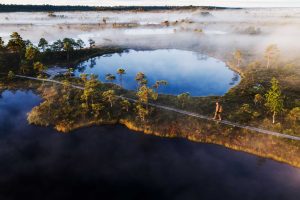
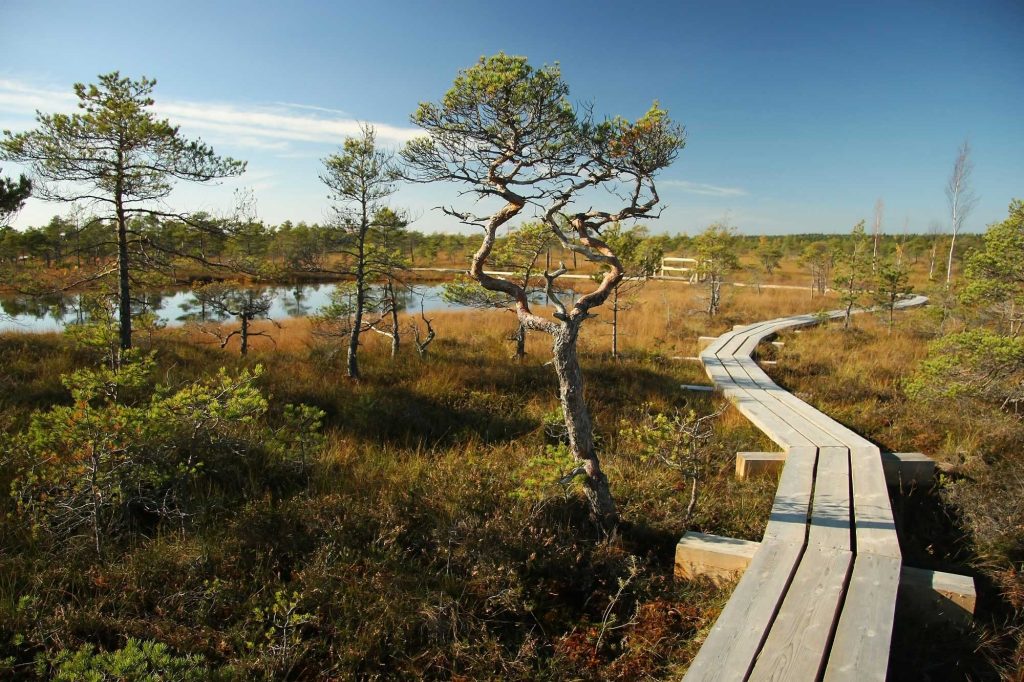
If you fancy going closer to nature, go for a hike in Kemeri National Park – within only 30 minute drive from Riga. The hike on a wooden walkway in Ķemeri high moor will take you into the realm of moss, small bog pines, dark lakes, and the scent of peat and Marsh Labrador tea. Looking carefully at the moss, you can notice the sundew, a carnivorous plant, or cranberries – without doubt the most popular Latvian berries. You can hear the voices of various birds above the head, like wood sandpiper, white wagtail, tree pipit, and maybe somewhere far away the call of cranes. Don’t miss the viewing platform and enjoy the magnificent views of the mysterious landscape of moorlands. If you wish to explore the moor even closer, you can opt for a bog walking tour with swamp shoes. It is a gentle way to approach these incredible landscapes in any season, without causing any damage to them. While hiking, you will learn interesting facts about the pristine moorlands, their ancient history and irreplaceable value to our ecosystem.
Seaside Serenity And Historic Traditions
Another day of your city break can be spent exploring the seaside towns and villages close to Riga. Latvian favourite summer vacation town Jūrmala is the most vibrant Latvian sea resort with over 150 years of traditions using curative waters, mud baths and variety of treatments at SPA and wellness hotels. Jūrmala is famous for its fairytale-like wooden architecture and beach strolls for over 30 km along the Baltic Sea. Many of the SPAs and health temples are facing the beach, where historically the aristocracy came to enjoy the tranquillity of this place.
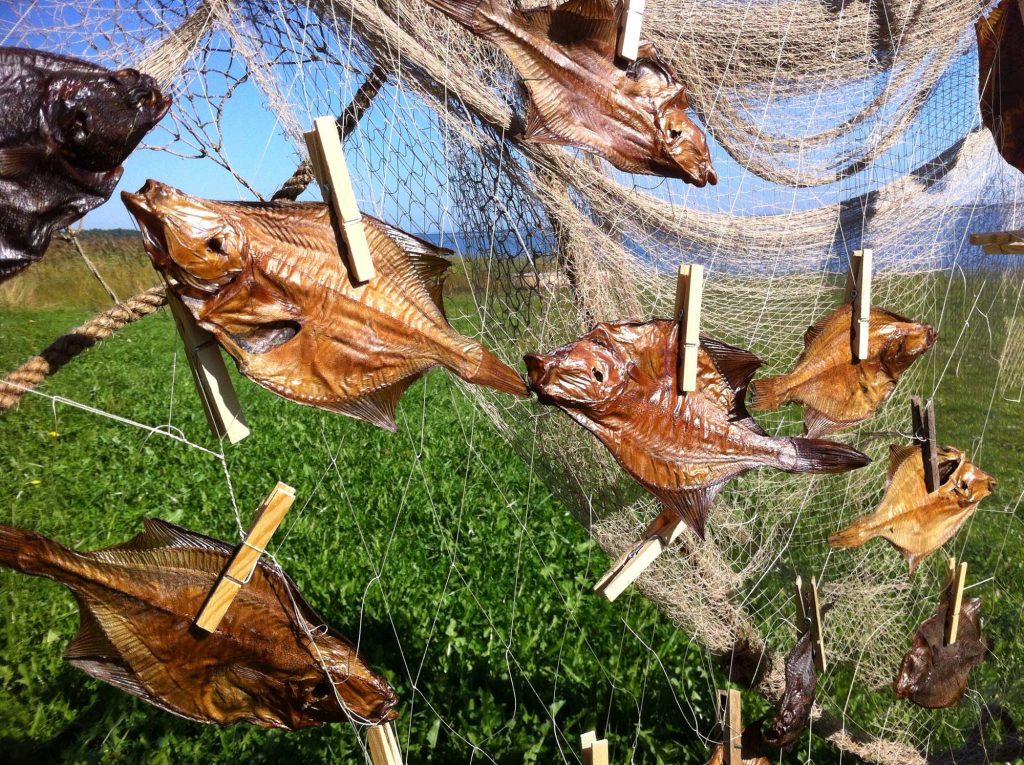
Driving further, visit a fisherman’s farm where the owner is a fifth-generation fisherman. Here you will experience centuries old traditions and the historic lifestyle. The attractive family offers active entertainment and fun team games, an insight into the process of fish smoking, and of course a meal with tasting the regional fish. The fish is prepared according to local recipes inherited from the family. Their specialties are dried and smoked plaice, and hot-smoked eel.
Visit the fishing village Ragaciems, see the former meeting place of the fishermen where joint meetings about fishing and the manufacture of fishing accessories were held, and where women and children wove fishing nets. Very few of the small barns meant for storing fishing nets and other inventory like anchors, buoys and other fishing gear are preserved. In Ragaciems several buildings in the traditional style have been rebuilt by the local fishermen. Take the chance to visit the local fish market before returning to Riga.
Splendour Of The Dukes
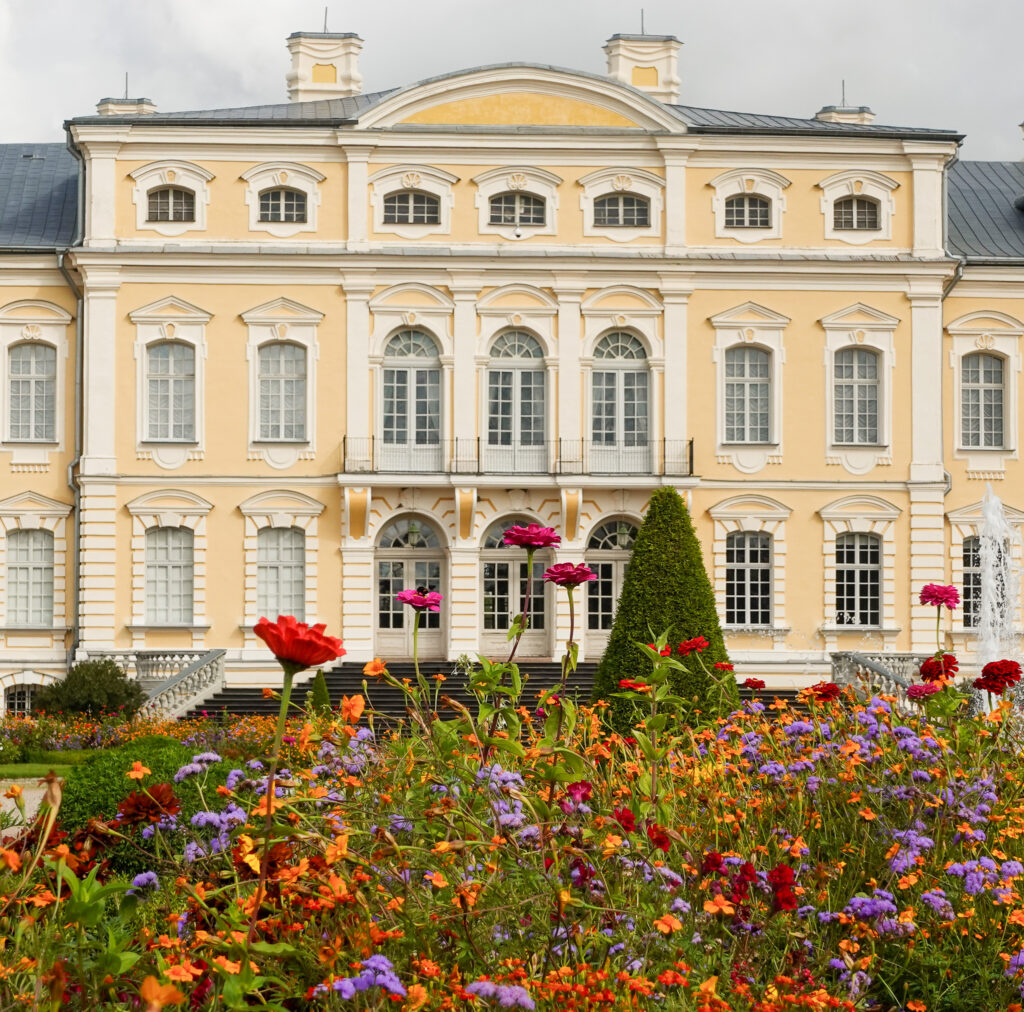
For a day filled with baroque opulence, take a tour to Rundāle Palace, a pearl of Baroque architecture in Latvia, standing proud in its original splendour in the quiet country estate of Zemgale. It is the Latvian version of Versailles. Today this place is meticulously restored, and it is hard to believe that it was used as a granary during World War II.
Rundale Palace was built in the 18th century as the summer residence of the Duke of Courland, Ernest Johann von Biron. The construction was inaugurated in 1736, and as Biron was favoured by the Russian Czarina Anna Ivanovna, he succeeded in engaging the Italian architect, Francesco Bartolomeo Rastrelli, the main architect of the Russian Court. The palace was fairly devastated in the course of time and in 1972 a comprehensive restoration of the palace was started. At present most of the rooms are carefully restored and open to public. The real treasure of the palace is the French garden, designed by Rastrelli at the same time as the palace building, and now restored to its previous beauty.
The visit to the palace can be enriched by a private baroque music concert and a photo shoot with the Master of Court Ceremonies and the Lady of the Duchess Court.
Nature Trails And Soviet Secrets
One of the most picturesque towns in Latvia is Sigulda, often called the Latvian Switzerland, located about 50 km from Riga in the Gauja National Park – the oldest and largest national park with a scenic landscape, characterized by great biological diversity, and unique natural and cultural monuments. Sigulda is known as the most popular leisure destination and a famous winter sports resort.
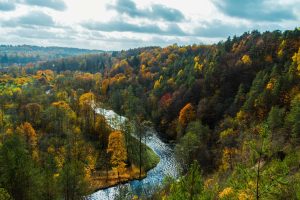
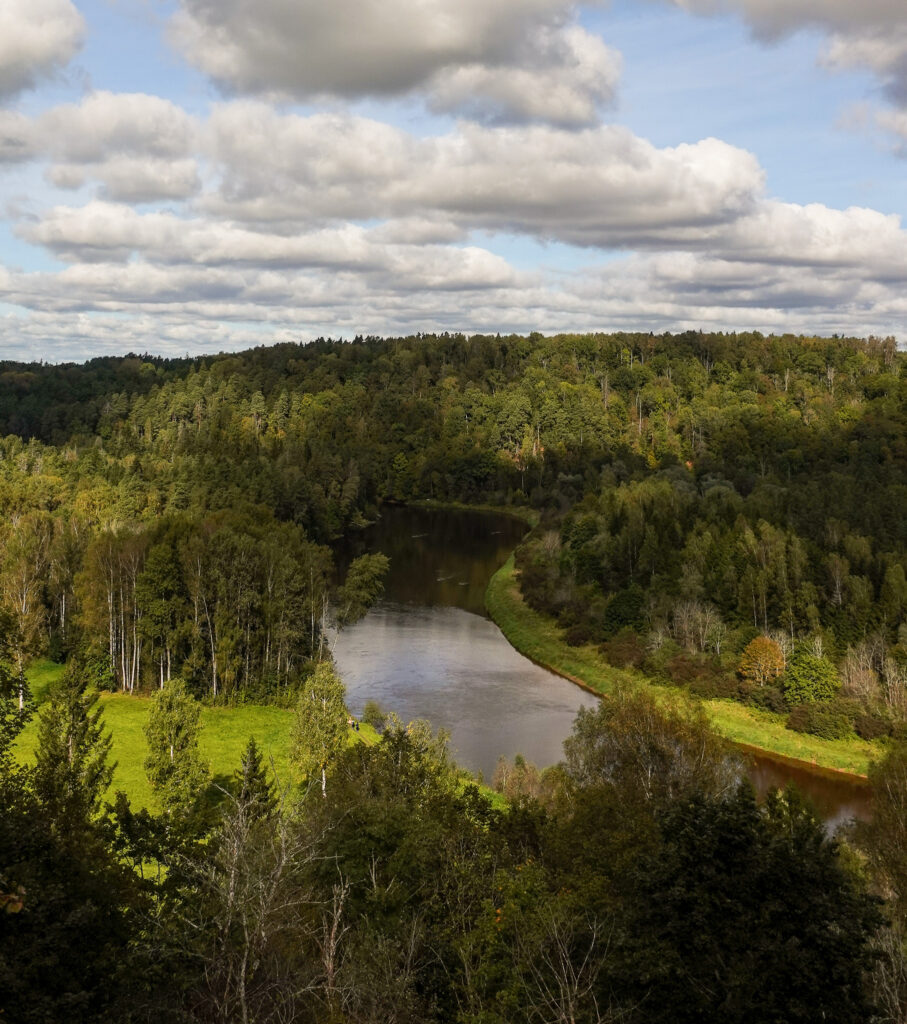
Continue to Līgatne for a hike along the nature trails. On the banks of Gauja River, in gorges overgrown with forests, there are over 5 km of trails where one can observe flora and fauna up close. There is also a large number of sandstone rocks and tiny caves in this area.
The most unusual curiosity of this area is the Secret Soviet bunker – a particularly secret object of the Soviet era with the code name “nursing home”. 9 metres under the rehabilitation centre indeed there is a well-equipped bunker with an area of over 2000 m², the confidentiality stamp of which was only removed in 2003. It was built as one of the most strategically important places in Soviet Latvia in the event of a nuclear war. The bunker was an autonomous economic structure with all the basic necessities, including the latest equipment of the time. To this day, all of the authentic equipment has been preserved and is still functioning.
Echoes Of The Past
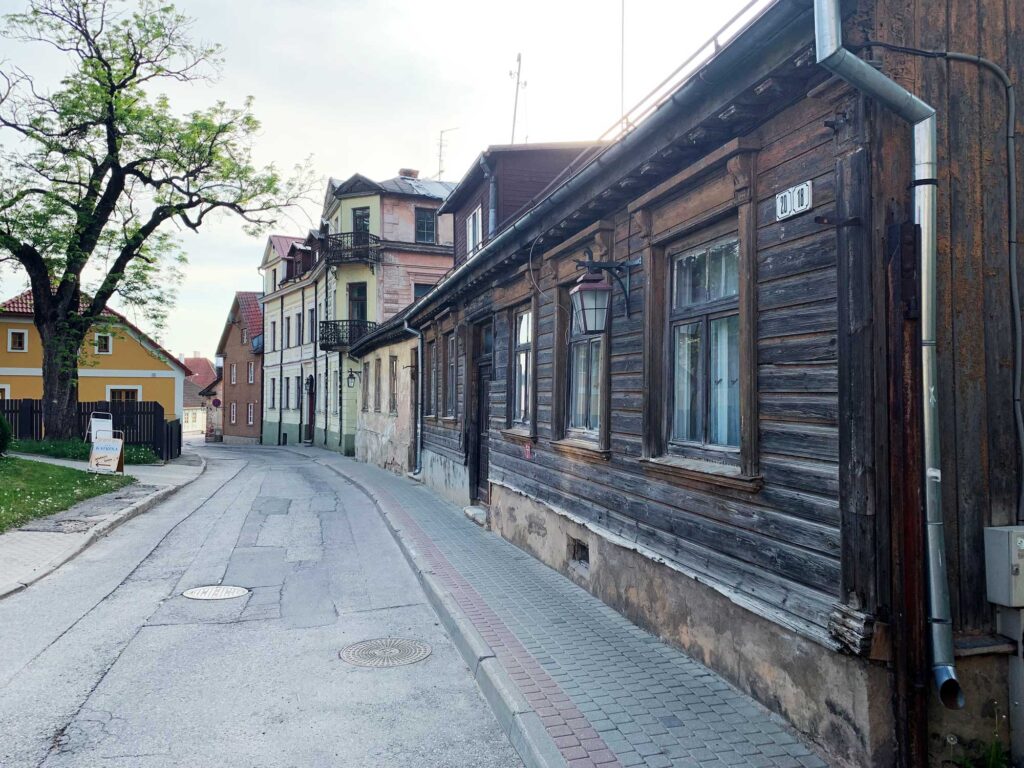
Why not to spend a day dedicated to ancient Latvian history? Start with the charming town Cēsis, located in the northern part of the heights of Vidzeme, and surrounded by forests and a picturesque natural landscape. Cēsis is not only one of the oldest Latvian towns and the birthplace of the Latvian national flag but also counts as one of the most beautiful towns in the country because of its tiny historical centre with winding cobblestone streets. Visit the medieval castle ruin, the former residence of the Master of Livonian Order and the symbol of the town. The romantic appearance of the medieval ruin was already appreciated in the 19th century when it was integrated into the complex of the new castle, nowadays serving as a museum.
Continue to Raiskums. After a hike in the forest you will reach a remote place where you will enjoy an ancient Latvian style picnic, prepared in front of your eyes from fresh regional products and served in ceramic dishes that are historical replicas. Experience the slow pace of time and the emotional detox of the Latvian nature while you chat with the picnic master about how the traditions have shaped the Latvian lifestyle or listen to him playing the national instrument kokle and singing some centuries old folk songs.