Hans stepped off the ferry in Liepāja, known among the locals as the city where the wind is born, and was immediately slapped in the face by a gust of air that felt like it had travelled from the North Pole just to meet him. It was refreshing, in a “you-are-now-awake” kind of way.
Armed with a bicycle and a backpack, Hans was heading east. He had told his friends he was coming for the “unspoiled nature,” but his Google Maps bookmarks told a different story: a curated pilgrimage to the Beer Embassy in Riga, a sanctuary with 200+ craft brews where the hops are treated with the reverence of holy relics.
But first, the solitude.
Latvia has a peculiar kind of emptiness. You can cycle for hours through forests that look like they were designed by a Romantic-era painter and not see a single human soul. Hans found this exhilarating until he developed a scratchy throat. Panicked by the lack of a neon “Pharmacy” sign, he eventually spotted a woman in a meadow. She was bent double, filling a basket with what looked like common weeds.
“Excuse me,” Hans croaked. “Is there a chemist nearby?”
The woman looked up. She didn’t look like a pharmacist; she looked like someone who had just finished a very long conversation with a oak tree and won. Her moss-coloured eyes looked at Hans, then at his expensive cycling gear, then back at Hans with a dry, knowing smirk.
“You are standing on the pharmacy, young man,” she said, gesturing to a patch of St. John’s Wort. “What’s broken?”
Hans, who had been prepared to ask for ibuprofen, suddenly felt like he was in an audition for a pagan folk-horror film. “My throat,” he croaked.
“Standard,” she sighed. “Follow me. My grandmother specializes in repairing broken city-people.”
She led him to a cottage that smelled like the inside of a tea chest. The grandmother, a woman who looked like she had personally witnessed the retreat of the last glacier, made Hans a life-giving infusion that tasted like a meadow after summer rain. Then came the Latvian sauna.
This was no gentle spa day. It was a rhythmic, humid exorcism. There were bundles of dried birch twigs and piles of various herbs. There was the smell of damp earth and heat so intense Hans began to reconsider every sin he’d ever committed. He felt like he was being prepared for a Viking funeral, but when the grandmother ushered him into the mandatory plunge in the icy pond, he didn’t die. Instead, he felt like he’d been granted a brand-new body, possibly an upgrade.
The next morning, the scratchy throat was a distant memory. Hans sat on the porch, tearing into a slice of heavy, dark rye bread – a bread so dense and soulful it could probably win a debate. The young woman from the meadow appeared, now wearing a backpack.
“You’re alive,” she noted, with a hint of disappointment. “Good. The wind is right for the coast. If you can keep up, I’ll show you where the world actually ends.”
Despite being in a forest so deep that time seemed to have stopped in 1840, Hans’ phone buzzed with five bars of 5G. He sent a photo of the cottage to his group chat: “The pharmacy was closed, so I had to consult a botanical genius and get beaten with a tree. Also, I’ve been recruited by a forest spirit. See you at the Beer Embassy… hopefully.”
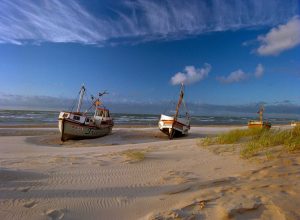
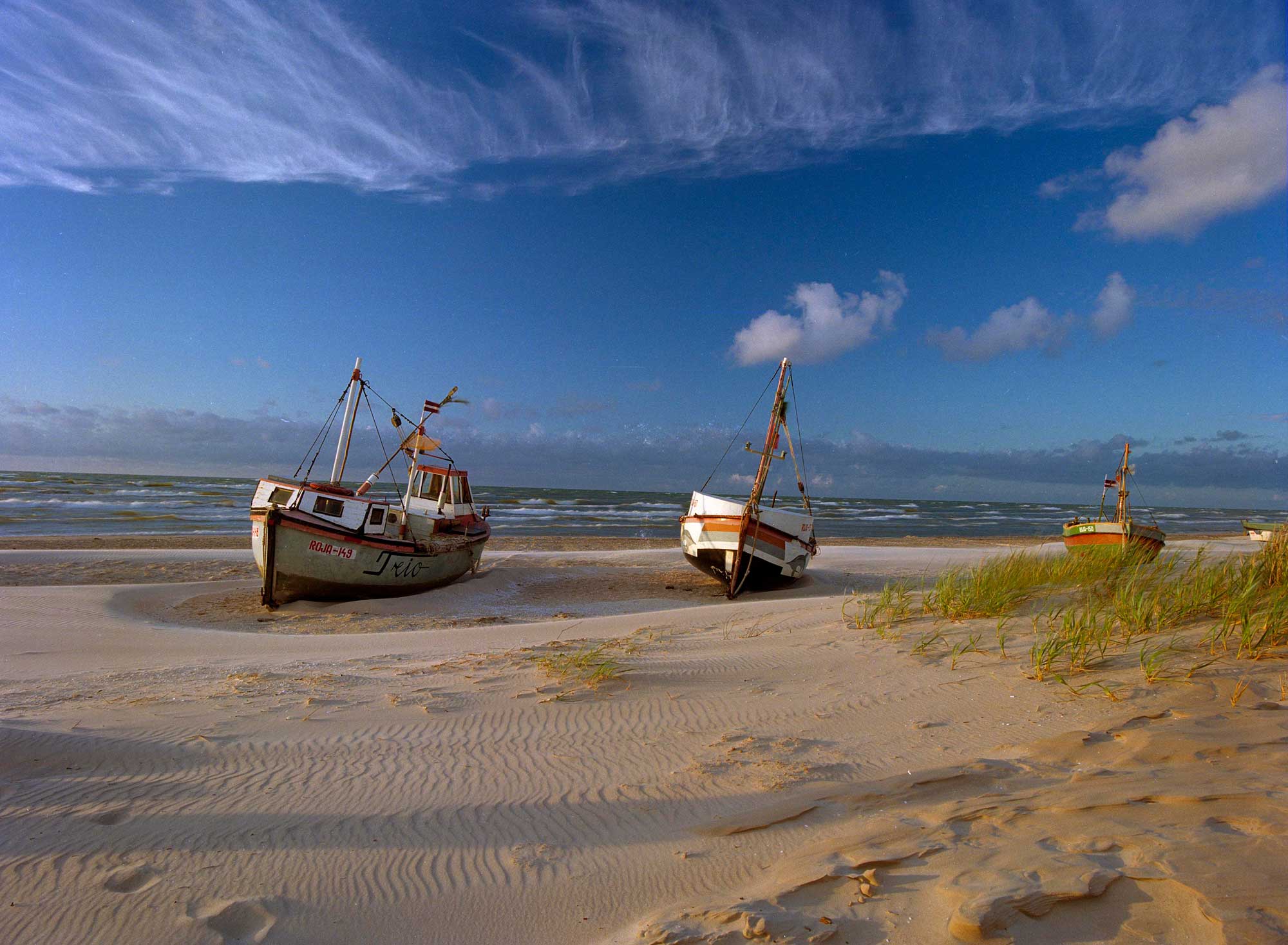
They pedalled north, the air turning saltier as they reached the Livonian Coast. This was the land of Līvi, the people who have spent centuries defying the sea. They stopped in a tiny fishing village where the houses were made of weathered wood and the language sounded like the Baltic Sea gargling stones. They ate freshly smoked flounder, still warm from the smokehouse.
“Is it always this quiet?” Hans asked, looking at the endless, empty sandy beach.
“It’s not quiet,” she replied, picking a bone from her fish. “The sea is talking. You just haven’t learned the dialect yet.”
Be like Hans. Come to Latvia. Learn the sea’s dialect.